Short answer: under the UL 325 safety standard, commercial door operators made since 2010 must either require the close button to be held down the whole way or use a monitored external safety device, usually a photo eye mounted near the floor or a sensing edge on the bottom of the door. Have these devices, the operator and the door itself checked at least once a year.
Why commercial doors need safety devices
A commercial door is heavy and often runs many times a day, with people, forklifts and vehicles passing under it. Safety devices stop and reverse the door when something is in its path. They protect people first, and they also prevent costly damage to vehicles, goods and the door itself.
What the standard requires
UL 325 is the safety standard for door operators. Since August 2010, commercial door operators must have one of two setups:
- Constant pressure to close: someone has to hold the close button for the door to keep moving, so they’re watching it.
- Monitored external entrapment protection: a photo eye or sensing edge that the operator checks continuously. If the device is missing, disconnected or faulty, the operator won’t close the door automatically.
If you want to close a door with a single press, a remote, a timer or any other automatic control, you need the monitored device. Older operators installed before 2010 may not meet the current standard.
The main safety devices
Photo eyes
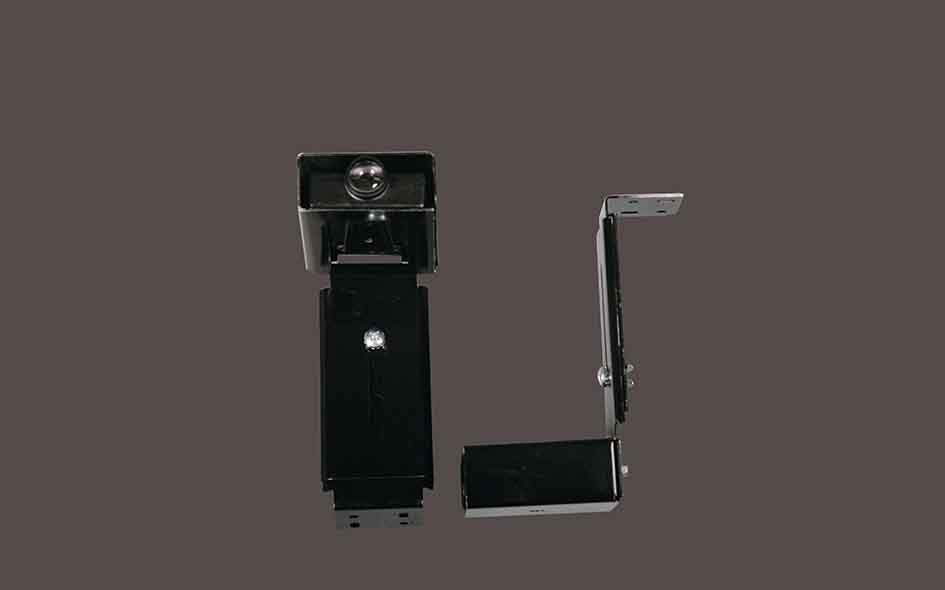
Photo eyes send an infrared beam across the opening. If something breaks the beam while the door is closing, the door reverses. When they’re used as the main safety device, they must be mounted no higher than 6 inches above the floor. Options include heavy-duty through-beam photo eyes and retro-reflective photo eyes, which use a single sensor and a reflector.
Sensing edges
A sensing edge runs along the bottom of the door and reverses it on contact. A bottom sensing edge protects the full width of the door, all the way to the floor. A monitored edge interface lets compatible edges work as the operator’s monitored safety device.
Extra protection
Many sites add a second layer: extra photo eyes higher up to detect trucks and trailers, light curtains, or vehicle loop detectors. These protect vehicles and the door. They don’t replace the monitored device near the floor.
What an annual safety check should cover
- Test the reverse with the photo eyes and sensing edge, and confirm the operator recognizes them as monitored.
- Check photo eye height, alignment and mounting, and clean the lenses.
- Inspect the sensing edge for cuts, crushing and loose wiring.
- Check springs, cables, drums, rollers, hinges and the bottom bar for wear.
- Test the door’s balance and the operator’s limits and controls.
- Check that warning labels and manual operation instructions are in place.
- Note any damage from vehicles or forklifts, and repair it before it gets worse.
Doors with heavy daily traffic may need checks more often. If your doors cycle many times a day, also see our guide to high-cycle springs.
Upgrading older doors
If your operator is old or your safety devices aren’t monitored, upgrading the operator is often the cleanest fix. Modern commercial operators such as the RHX support monitored safety devices, and a commercial Wi-Fi module adds remote monitoring through OHD Anywhere®.
Frequently asked questions
Do I have to replace an older commercial operator?
Operators installed before the 2010 update aren’t automatically required to be replaced, but they may not meet the current standard. Adding monitored devices or upgrading the operator is strongly recommended, especially for doors that close automatically.
How high should commercial photo eyes be mounted?
When photo eyes are the main safety device, they must be no higher than 6 inches above the floor. Additional photo eyes for vehicles can be mounted higher.
How often should commercial doors be inspected?
At least once a year, and more often for doors that run many times a day or get hit by vehicles.
Need your doors checked or upgraded? Request service or call us at 631-701-6922.