Short answer: in cold weather, a garage door usually fails because the bottom seal is frozen to the ground, grease has stiffened, the safety sensors are blocked by frost, remote batteries are weak, or a spring has broken. Check the simple things first. If you hear a loud bang or the door feels very heavy, stop and call a technician.
Start here: what is the door doing?
- The opener hums but the door doesn’t move: the door may be frozen to the ground, or a spring may be broken.
- The door starts to close, then reverses: usually the safety sensors, or the opener sensing extra resistance.
- Nothing happens when you press the remote: check the remote battery, the wall button and power to the opener.
- The door moves slowly or jerks: stiff grease, worn rollers or a door that’s out of balance.
Common causes in cold weather
A frozen bottom seal
Melting snow and rain run under the door and freeze overnight, gluing the rubber seal to the ground. Don’t keep pressing the opener or force the door up: you can tear the seal or strain the opener. Clear the ice along the bottom and loosen the seal with warm air from a hair dryer or a heat gun on low. A plastic scraper helps. Avoid hot water, which refreezes and makes it worse.
Stiff grease and lubricant
Old grease thickens in the cold, so rollers, hinges and the opener have to work harder. The opener may stop or reverse because it senses too much resistance. Clean off old grease and use a lubricant made for garage doors on the hinges, rollers and springs.
Blocked or misaligned safety sensors
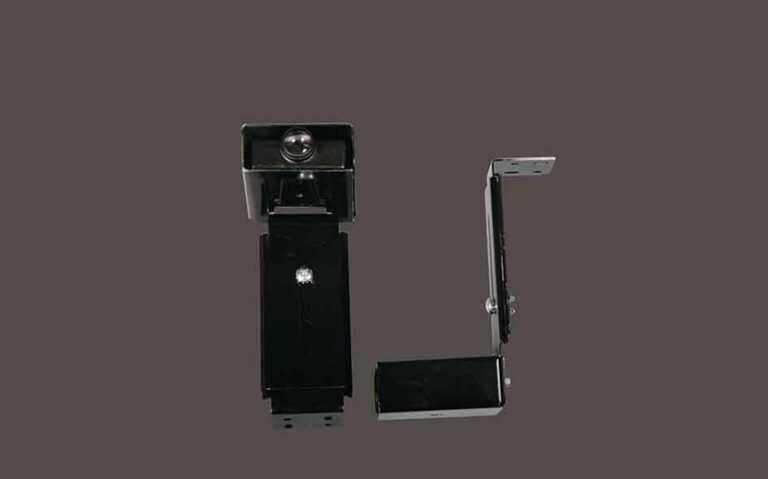
The safety beams near the bottom of the door stop it from closing on something in its path. Frost, condensation, snow, dirt or a bumped bracket can block the beam, so the door reverses or won’t close. Wipe the lenses and check that the small indicator lights on both sensors are on and steady.
Weak batteries
Cold drains batteries. If the wall button works but the remote doesn’t, replace the remote battery. A wireless keypad or wall console can have the same problem.
A broken spring
Springs are more likely to snap in cold weather, especially if they’re already worn. Signs include a loud bang from the garage, a gap in a spring above the door, or a door that’s very heavy and won’t lift more than a few inches. Don’t try to open it. Read our guide on what to do about a broken spring.
Opener settings
Some openers have force and travel settings that may need adjusting as parts age. It’s best to have a technician make these changes, since the settings affect how the door reverses on an obstruction.
When to stop and call for help
- You heard a bang, or you can see a gap in a spring.
- A cable is loose, frayed or off its drum.
- The door is crooked or off its track.
- The opener keeps reversing after you’ve cleared ice and cleaned the sensors.
Our garage door repair team handles springs, cables, rollers and openers across NYC and Long Island.
Preventing winter problems
A quick pre-winter check of the seal, lubrication, balance and sensors prevents most of these problems. See our winter checklist. If your opener is old and struggling, a modern opener with soft start and stop, like the Legacy® 950, puts less strain on the door, and a battery backup keeps it running when storms cut the power.
Frequently asked questions
Why does my garage door close and then go back up in winter?
The safety sensors may be blocked by frost or dirt, or the opener may be sensing extra resistance from a frozen seal or stiff parts. Clean the sensor lenses and clear any ice first.
Is it safe to open a frozen garage door by hand?
Only if it’s balanced and the springs are intact. Free the bottom seal first. If the door feels very heavy, don’t lift it: a broken spring may be the cause.
Can cold weather break a garage door spring?
Cold makes steel springs more brittle, so worn springs often fail in winter. A spring in good condition usually handles the cold fine.
Door stuck? Request service or call us at 631-701-6922.